Monroe Celebrates Hispanic Heritage Month: Meet Lalie Dimond
“My parents were once in your shoes,” Eulalie “Lalie” Dimond tells apprehensive parents who come to see her, many of whom are anxiously debating whether college makes sense for their child. The director of enrollment for the School of Education at Monroe University knows that these are monumental decisions for any parent -- especially one who may never have had a college graduate in the family before.
Her work is especially meaningful to her because she faced many of her own barriers in pursuit of higher education. As a teenager, Lalie and her family immigrated to the United States from the Dominican Republic in search of more opportunities.
“My dad brought me and two of my siblings here because he wanted us to have a better life and to have the American dream,” Lalie said. “He wanted us to be able to get an education, to be able to work and support my mom and my three other siblings who stayed back in the Dominican Republic. The goal was to eventually reunite the family.” He did so five years later.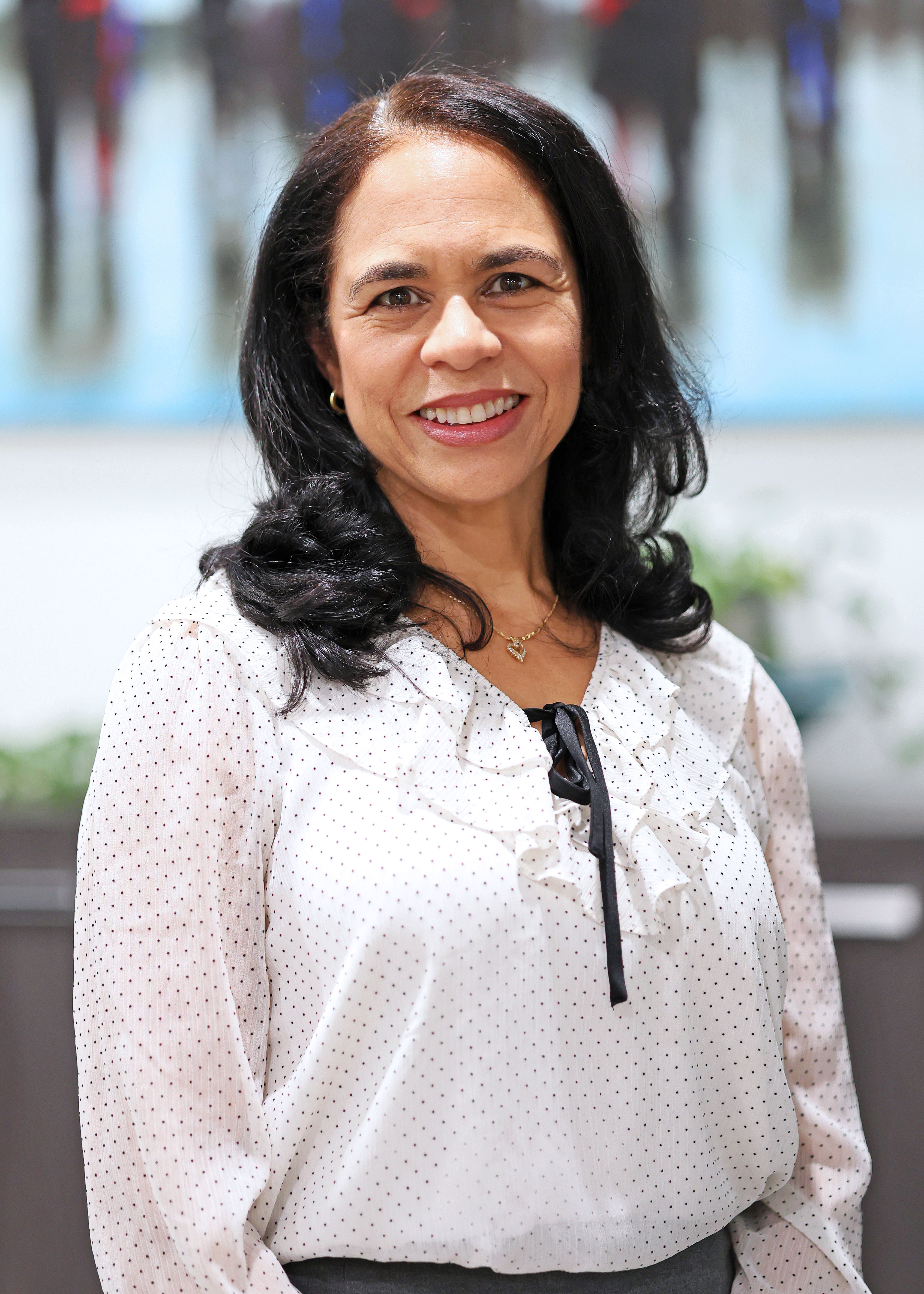
As someone who was still learning English, high school was a challenge, but Lalie was smart and determined to succeed.
She remembers the impact of supportive adults at her school -- one Spanish teacher, in particular -- who would help translate for her and other native Spanish speakers during study hall. While working the night shift at a cosmetics factory, she successfully graduated from high school, fulfilling her parents’ vision of her receiving an education.
College was not necessarily something Lalie's mother and father had envisioned for her. After all, once she graduated from high school, she could help provide for herself and her family -- even those back in the Dominican Republic -- by going to work.
So that was what she did -- but this time, Lalie left the factory job for a better-paying job in a doctor’s office. She would sometimes allow herself to wonder about college. What was it like? Would she be successful? What would it mean for her and her family’s future? She knew that she wanted to continue helping her family, but the dream of higher education persisted in her mind.
Over time, Lalie no longer wanted to wonder about college. She wanted to see it and experience it for herself. So she explored nearby institutions to find a good fit and spoke with her employer about her plans. She realized she could make it work if she worked during the day and attended school in the evening.
Now, all she had to do was convince her family.
“There were 4 of us in our family, so my dad said, ‘We all need to contribute, and we came here for the American dream, so we've got to make it happen’,” she recalled him responding when she shared her college plans. “I told him, ‘Dad, I'm going make that happen for you, but I'm also going make it happen for me. I want to get this education.’”
Those early experiences in the United States continue to guide her work at Monroe. Hired in 2008 as Diversity Liaison in Admissions, Lalie joined the University to help strengthen Hispanic and Latino enrollment. Now, 18 years later, she serves as Director of Enrollment for the School of Education, where she works with graduate and undergraduate students. She helps prospective students and their families -- many of whom remind her of her parents -- understand what to expect in the admissions process, how financial aid works, and the possibilities that open up with a college education.
“That’s where I start my conversation most of the time with parents,” Lalie shared. “I say, ‘Look, my parents were in your shoes. And they always wanted something better for me.’”
She tells them about the generational impact of a college education -- how her son, whom she shares with her husband, David Dimond, Monroe’s Senior Vice President of Operations, has had a good childhood with lots of opportunity and how he is now pursuing college himself.
“I see my role as someone who can help break that cycle,” she said. “That person I enroll gets the education, and then when that person has children, and those children also have the opportunity to move forward, that they also have opportunities – and so on and so on. My hope is that their children will not be first-generation college students.”
Her work goes beyond counseling parents and prospective students, though. Remembering her Spanish teacher from high school, Lalie makes a point of occasionally checking in with the students and families she has helped enroll -- especially if she sees that a student might be struggling. If there are barriers she can help mitigate, she works with faculty, students, and family members to determine where adjustments can be made so the student can continue working toward a degree.
She knows that if her students are successful, they can go on to support or lift up someone else in their community, just as her Spanish teacher did for her years ago.
“It’s my hope that when they become college graduates, they can pay it forward, too,” she said. “They can go educate someone else from their community, or translate for someone else who doesn’t understand the language.”
In her nearly two decades at Monroe, Lalie said she is especially proud of her advocacy to bring three Long Island high schools into the University’s Presidential Partnership Program (PPP). The initiative allows eligible students to access significant scholarships to attend Monroe, often without having to take out student loans or incur out-of-pocket costs. This further opens up opportunities for students -- regardless of their backgrounds -- to pursue higher education.
During her tenure at Monroe, Lalie said she especially appreciates how much the University values difference -- how people are encouraged to be themselves and feel safe expressing their unique cultural identities.
"Monroe is a very diverse place. We’re diverse not only in race, but economically and in many other ways,” she said. “Diversity is embraced here, and that really makes an impact – we are culturally alive. We help enrich our students, and then they go out and enrich their communities.”
Now, during Hispanic Heritage Month, that feeling of belonging is especially potent. As a Dominican woman, an immigrant, a first-generation college student, an advocate, and a mother, Lalie encourages Monroe students -- especially those who share one or more of her identities -- to believe in themselves and ask for help when they need it.
“I tell them ‘never forget where you came from’ and to never stop working on their dreams,” Lalie said. “‘Just follow through, you’ll get there – don’t give up.’”
What if a student feels like dropping out or giving up on college?
“If they ever get to a point where they feel like quitting, they can call me,” she said. “I will tell them 20 different ways as to why you shouldn’t give up.”